

Compare our Orca model with traditional vans and discover the best solution for your business

Urban deliveries are an increasing challenge for logistics companies. Heavy traffic, environmental restrictions, and rising operational costs make choosing the right vehicle essential to ensure efficiency and competitiveness.
Traditionally, fossil-fuel vans have been the most common solution. However, with the evolution of electric mobility and growing pressure to reduce emissions, alternatives better suited to the urban context are emerging.
In this article, we compare conventional vans with our Orca model, a 100% electric vehicle designed to meet the demands of urban deliveries, analyzing key criteria such as operational cost, load capacity, maneuverability, environmental impact, range, and maintenance.
Operational Cost
According to data from the Portuguese Electric Vehicle Users Association (UVE), driving 100 km in a gasoline-powered car costs an average of €9.79. For a diesel vehicle, this drops to €7.36.
For electric vehicles, assuming charging on the public network, driving 100 km costs about €8.02. If charged on a domestic network, the cost falls to an impressive €3.19.
For logistics companies, this difference is significant. A vehicle dedicated to urban deliveries covers a substantial number of kilometers each month, and fuel costs represent a major share of operating expenses.
The good news? In most cases, the fleet will be charged at the company’s premises, where the cost per 100 km is close to €3.19, ensuring substantial savings compared to fossil fuels.
Compared to fossil-fuel vans, the Orca has a clear advantage. Fully electric, it combines efficiency and sustainability, offering a modern and economical solution that stands out as the smart choice for urban deliveries over traditional commercial vehicles.
Values estimated by UVE based on data from late 2025.
Load Capacity
Load capacity is a critical factor for any delivery operation. Traditional vans offer generous volumes, but this comes with larger dimensions that make maneuvering in urban areas more difficult.
The Orca, on the other hand, offers a balanced solution: with over 5 m³ of volume and a payload capacity exceeding 1,000 kg, it provides enough space for most urban deliveries without sacrificing mobility. This combination allows significant loads to be transported while maintaining the agility needed for narrow streets and congested zones.
Additionally, like conventional vans, the Orca offers multiple configurations, such as closed box, tipper, or refrigerated, ensuring versatility for different sectors. The difference lies in efficiency: while traditional vans face environmental restrictions and higher costs, the Orca combines capacity and sustainability, making it a competitive alternative for urban operations.
Maneuverability
In urban deliveries, agility is as important as load capacity. Narrow streets, heavy traffic, and limited parking make city driving a real challenge, delaying routes and complicating delivery stops.
Traditional vans, due to their size, face these obstacles daily. Each difficulty in parking or maneuvering adds up, costing precious minutes and reducing service efficiency.
The Orca was designed to overcome these barriers. With compact dimensions, a reduced turning radius, and excellent maneuverability, it easily navigates historic areas, residential neighborhoods, and congested city centers, ensuring faster deliveries and smoother operations.
Environmental Impact
Beyond operational costs, it’s essential to consider the environmental impact of your fleet. Air pollution remains one of the biggest challenges for cities, directly affecting the quality of life in urban centers.
According to the European Environment Agency, the transport sector accounts for about a quarter of CO2 emissions in the EU, with road transport responsible for 71.7% of these emissions. This reality has serious consequences. The Portuguese Environment Agency (APA) estimates that around 1,000 people die prematurely every day in the EU due to air pollution.
And air pollution isn’t the only concern. Noise pollution, mainly caused by road traffic, affects approximately 125 million people in the EU, increasing risks of stress and sleep disorders.
Electric vehicles offer an effective solution to these problems as they emit no pollutants and produce far less noise, contributing to cleaner, quieter cities. Making your fleet 100% electric is therefore a decisive step toward reducing your environmental footprint and improving urban quality of life.
Moreover, the growing trend of Low Emission Zones (LEZ) in cities may restrict or even ban polluting vehicles, complicating logistics operations.
With the Orca, that concern disappears. Being 100% electric, it allows you to significantly reduce your company’s ecological footprint and guarantees access to areas where traditional vans will no longer be allowed.
Range
Range is another key factor when choosing a delivery vehicle. Traditional fossil-fuel vans offer an average of 600 to 900 km on a full tank, providing long-distance capability. However, in urban operations, where routes are short and vehicles return to base daily, this advantage becomes less relevant.
The Orca, being fully electric, offers a range optimized for this context. Up to 200 km in the standard version and 300 km in the XL version, more than enough to cover multiple urban routes on a single charge. Charging can also be done overnight at the company’s premises, ensuring vehicles are ready for the next day without additional downtime.
Thus, while traditional vans retain an edge for long-distance trips, in the urban scenario, the Orca provides the necessary range with the added benefits of lower costs and zero emissions.
Maintenance
Maintenance costs are often underestimated in fleet management. Traditional vans, with their complex combustion engines, require frequent service and replacement of components such as engine oil, filters, clutches, and exhaust systems. These not only increase direct costs but also mean more downtime for maintenance.
Electric vehicles like the Orca have a much simpler design. They don’t need oil, have fewer moving parts, and lack systems such as exhausts. This simplicity translates into fewer interventions, less wear, and significantly lower costs over time.
So, while traditional vans continue to demand regular and costly maintenance, the Orca offers a more economical and predictable alternative, reducing both expenses and fleet downtime.
Conclusion
The analysis is clear, although traditional vans retain some advantages for long-distance routes, in an urban context, the Orca stands out as a more efficient, economical, and sustainable solution.
With lower operating costs, reduced maintenance needs, easy access to low-emission zones, and a range perfectly suited to urban routes, the Orca offers a competitive edge for companies looking to optimize operations and align with future mobility trends.
Discover more about Orca.
You Might Also Like

Orca vs Traditional Van: Which Is the Best Choice for Urban Deliveries?
Compare our Orca model with traditional vans and discover the best solution for your business.
Read more
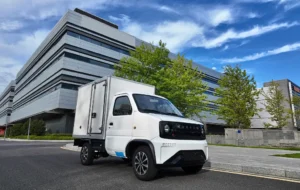
Meet Orca: an Electric Commercial Vehicle for Logistics and Transport
Discover Orca and learn how this electric commercial vehicle can make your logistics operation more efficient and sustainable.
Read more