
From Vehicle Selection to Route Planning: 6 Strategies to Increase Urban Logistics Efficiency
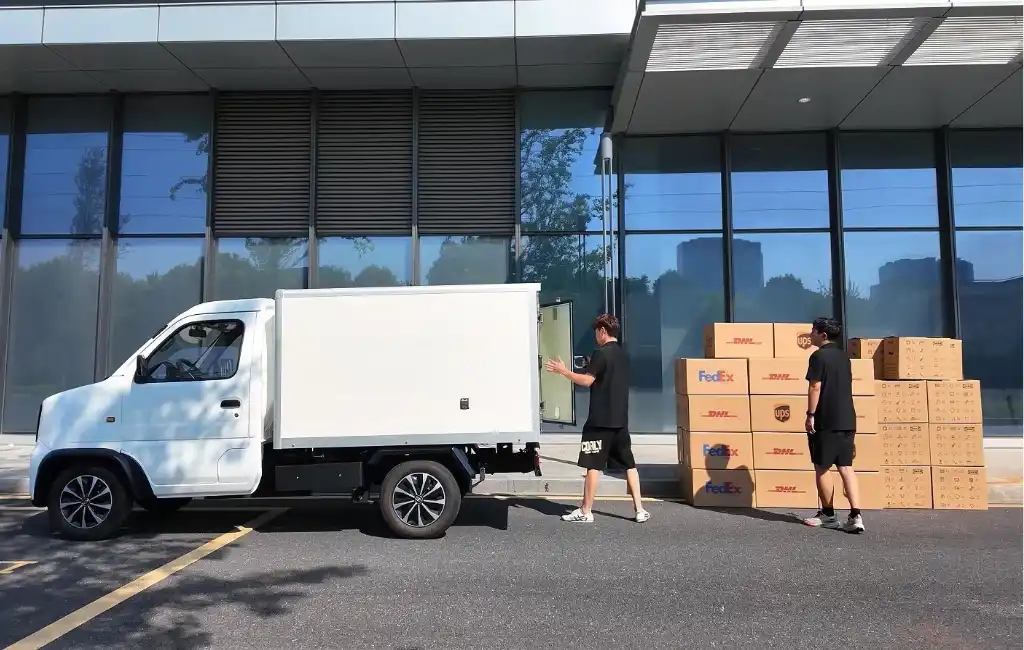
Urban logistics has become increasingly complex as cities continue to grow, e-commerce keeps expanding, and consumer expectations rise. Today, customers expect fast, reliable deliveries with a high level of convenience, placing growing pressure on logistics operators and distribution companies.
In this context, last-mile delivery stands out as one of the most challenging and costly stages of the entire supply chain. It is during this phase that many of the issues affecting urban logistics efficiency arise, from traffic congestion and parking difficulties to environmental restrictions imposed by city centres and driver shortages.
At the same time, the growing volume of orders generated by e-commerce forces businesses to carry out more deliveries, often within increasingly shorter timeframes. Faced with this reality, improving operational efficiency is no longer just a competitive advantage but a strategic necessity.
The good news is that significant results do not always require major changes. Adopting simple strategies, such as selecting the most suitable vehicles, optimising routes, maximising cargo capacity, and reducing failed deliveries, can have a direct impact on operating costs, fleet productivity, and customer satisfaction.
In this article, we present some of the key strategies for increasing urban logistics efficiency and making distribution operations more profitable, sustainable, and better prepared to face the challenges of modern cities.
In this context, last-mile delivery stands out as one of the most challenging and costly stages of the entire supply chain. It is during this phase that many of the issues affecting urban logistics efficiency arise, from traffic congestion and parking difficulties to environmental restrictions imposed by city centres and driver shortages.
At the same time, the growing volume of orders generated by e-commerce forces businesses to carry out more deliveries, often within increasingly shorter timeframes. Faced with this reality, improving operational efficiency is no longer just a competitive advantage but a strategic necessity.
The good news is that significant results do not always require major changes. Adopting simple strategies, such as selecting the most suitable vehicles, optimising routes, maximising cargo capacity, and reducing failed deliveries, can have a direct impact on operating costs, fleet productivity, and customer satisfaction.
In this article, we present some of the key strategies for increasing urban logistics efficiency and making distribution operations more profitable, sustainable, and better prepared to face the challenges of modern cities.
Summary
- Choose the Right Vehicle for Urban Environments
- Maximize Load Space Utilisation
- Optimize Route Planning
- Reduce Failed Deliveries
- Use Electric Vehicles for Urban Operations
- Use Data to Continuously Improve Operations
Choosing the Right Vehicle for Urban Environments
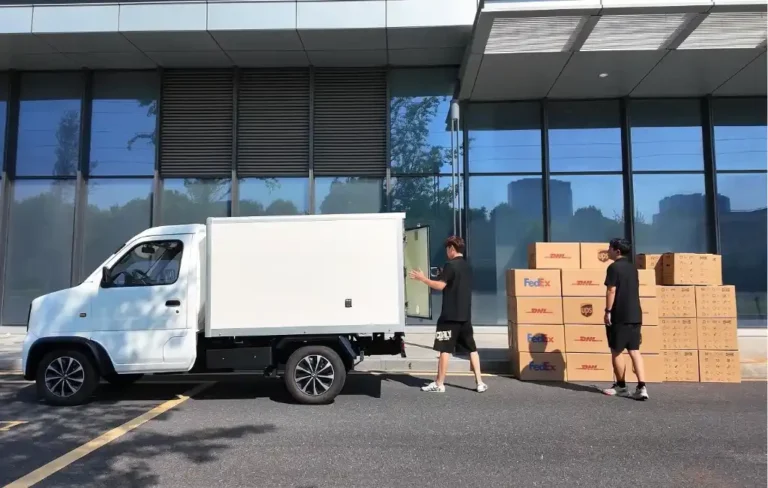
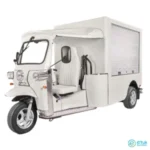
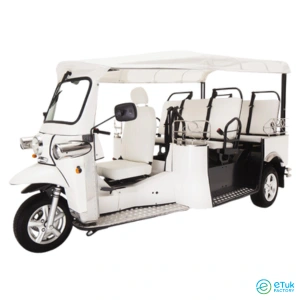
When it comes to urban logistics, it is often assumed that a vehicle with a larger payload capacity is always the best option. However, this is not necessarily the most efficient solution. In dense urban environments, manoeuvrability and ease of movement can have a much greater impact on operational productivity than maximum carrying capacity.
Compact vehicles that are well suited to the demands of urban distribution can navigate city streets more easily, find parking faster, and complete deliveries more efficiently. As a result, drivers spend less time travelling and more time completing deliveries.
Vehicle selection should also reflect the actual needs of the operation. Using a vehicle with a significantly higher capacity than required can lead to increased operating costs without providing any practical benefit. In many cases, a smaller vehicle can carry all the goods needed for a daily route while offering greater flexibility and efficiency.
By matching vehicle capacity to the type of goods being transported and the environment in which the operation takes place, companies can reduce delivery times, improve fleet productivity, and enhance urban logistics efficiency. Ultimately, the ideal vehicle is not necessarily the largest one, but the one that best meets the specific requirements of each operation.
Compact vehicles that are well suited to the demands of urban distribution can navigate city streets more easily, find parking faster, and complete deliveries more efficiently. As a result, drivers spend less time travelling and more time completing deliveries.
Vehicle selection should also reflect the actual needs of the operation. Using a vehicle with a significantly higher capacity than required can lead to increased operating costs without providing any practical benefit. In many cases, a smaller vehicle can carry all the goods needed for a daily route while offering greater flexibility and efficiency.
By matching vehicle capacity to the type of goods being transported and the environment in which the operation takes place, companies can reduce delivery times, improve fleet productivity, and enhance urban logistics efficiency. Ultimately, the ideal vehicle is not necessarily the largest one, but the one that best meets the specific requirements of each operation.
Maximising Load Space Utilisation
Logistics efficiency depends not only on the number of vehicles available or the speed of deliveries. The way cargo is organised and distributed within the vehicle also plays a crucial role in operational performance.
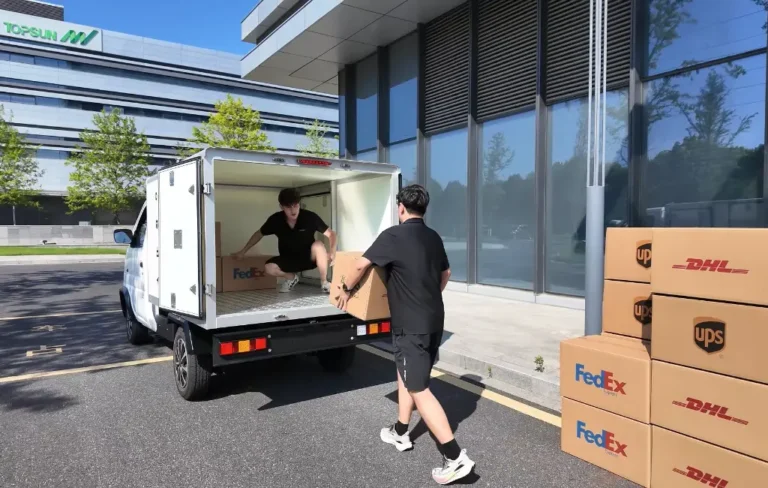
One of the first steps towards improving this aspect is to group parcels according to their geographical destination or planned delivery sequence. This ensures that the items to be unloaded first are easily accessible, preventing drivers from having to move other goods or spend time searching for the correct parcel at each stop.
The use of appropriate storage solutions, such as partitions, shelving, or dedicated compartments for specific types of cargo, can also contribute to better organisation. In addition to optimising the available space, these solutions help protect goods during transit and make parcels easier to access throughout the route.
The choice of vehicle itself can also have a significant impact on load space utilisation. When assessing vehicles for urban distribution, it is important to check whether the cargo area is fully usable and features a regular configuration. Some van models have wheel arch intrusions inside the load compartment, reducing the available usable space and making cargo organisation more difficult.
When cargo is organised in a logical and efficient manner, the time spent on each delivery can be significantly reduced. Drivers can locate products more quickly, minimise stop times, and complete more deliveries within the same period of time.
One of the first steps towards improving this aspect is to group parcels according to their geographical destination or planned delivery sequence. This ensures that the items to be unloaded first are easily accessible, preventing drivers from having to move other goods or spend time searching for the correct parcel at each stop.
The use of appropriate storage solutions, such as partitions, shelving, or dedicated compartments for specific types of cargo, can also contribute to better organisation. In addition to optimising the available space, these solutions help protect goods during transit and make parcels easier to access throughout the route.
The choice of vehicle itself can also have a significant impact on load space utilisation. When assessing vehicles for urban distribution, it is important to check whether the cargo area is fully usable and features a regular configuration. Some van models have wheel arch intrusions inside the load compartment, reducing the available usable space and making cargo organisation more difficult.
When cargo is organised in a logical and efficient manner, the time spent on each delivery can be significantly reduced. Drivers can locate products more quickly, minimise stop times, and complete more deliveries within the same period of time.
Optimising Route Planning
Route planning is one of the areas with the greatest potential for improving urban logistics efficiency. Even when the fleet is well suited to the operation and cargo is properly organised, poorly planned routes can lead to unnecessary mileage, delivery delays, and higher operating costs.
Today, fleet management software enables routes to be planned far more efficiently than traditional methods. These tools help identify the most suitable routes, allocate deliveries across different vehicles, and monitor operational performance in real time.
Continuous traffic monitoring is equally important. Accidents, roadworks, and congestion can quickly turn an efficient route into a source of delays. By tracking traffic conditions in real time, companies can anticipate potential issues and make more informed decisions throughout the operation.
In this context, routes should not be viewed as fixed. The most efficient operations rely on dynamic adjustments whenever unexpected changes occur. This flexibility helps maintain service levels without compromising fleet productivity.
Today, fleet management software enables routes to be planned far more efficiently than traditional methods. These tools help identify the most suitable routes, allocate deliveries across different vehicles, and monitor operational performance in real time.
Continuous traffic monitoring is equally important. Accidents, roadworks, and congestion can quickly turn an efficient route into a source of delays. By tracking traffic conditions in real time, companies can anticipate potential issues and make more informed decisions throughout the operation.
In this context, routes should not be viewed as fixed. The most efficient operations rely on dynamic adjustments whenever unexpected changes occur. This flexibility helps maintain service levels without compromising fleet productivity.
Reducing Failed Deliveries
Failed deliveries are one of the biggest challenges in last-mile logistics. In addition to their direct impact on operating costs, every unsuccessful delivery attempt results in wasted time, additional mileage, and a less satisfactory experience for the end customer.
One of the most effective ways to minimise this issue is through proactive communication with recipients. Keeping customers informed about the expected delivery date, any schedule changes, or unexpected delays helps manage expectations and increases the likelihood that someone will be available to receive the parcel.
Providing more precise delivery time windows can also help reduce the number of failed deliveries. The more accurate the delivery estimate, the easier it is for recipients to organise their availability. Although guaranteeing exact delivery times in dynamic urban environments is challenging, modern technology makes it possible to provide increasingly reliable estimates.
Real-time tracking is another valuable tool. By allowing customers to follow their parcel’s journey and know when the vehicle is approaching the delivery location, the risk of the recipient being unavailable upon the driver’s arrival is significantly reduced.
Similarly, delivery confirmation prior to dispatch can help identify potential issues before goods leave for distribution. A simple verification of the address, telephone number, or recipient availability can prevent unnecessary journeys and additional costs.
Whenever possible, companies should also encourage collections from pickup points or smart lockers. This solution offers greater flexibility to customers, reduces dependence on specific delivery times, and enables multiple deliveries to be consolidated in a single location, significantly improving operational efficiency.
By reducing the number of failed deliveries, companies can eliminate unnecessary journeys, optimise fleet utilisation, and improve workforce productivity. At the same time, they provide a more convenient experience for recipients, contributing to higher levels of customer satisfaction and loyalty.
One of the most effective ways to minimise this issue is through proactive communication with recipients. Keeping customers informed about the expected delivery date, any schedule changes, or unexpected delays helps manage expectations and increases the likelihood that someone will be available to receive the parcel.
Providing more precise delivery time windows can also help reduce the number of failed deliveries. The more accurate the delivery estimate, the easier it is for recipients to organise their availability. Although guaranteeing exact delivery times in dynamic urban environments is challenging, modern technology makes it possible to provide increasingly reliable estimates.
Real-time tracking is another valuable tool. By allowing customers to follow their parcel’s journey and know when the vehicle is approaching the delivery location, the risk of the recipient being unavailable upon the driver’s arrival is significantly reduced.
Similarly, delivery confirmation prior to dispatch can help identify potential issues before goods leave for distribution. A simple verification of the address, telephone number, or recipient availability can prevent unnecessary journeys and additional costs.
Whenever possible, companies should also encourage collections from pickup points or smart lockers. This solution offers greater flexibility to customers, reduces dependence on specific delivery times, and enables multiple deliveries to be consolidated in a single location, significantly improving operational efficiency.
By reducing the number of failed deliveries, companies can eliminate unnecessary journeys, optimise fleet utilisation, and improve workforce productivity. At the same time, they provide a more convenient experience for recipients, contributing to higher levels of customer satisfaction and loyalty.
Using Electric Vehicles for Urban Operations
As cities seek to reduce congestion and transport-related emissions, an increasing number of measures are being introduced to restrict the circulation of conventional vehicles in certain urban areas. In this context, electric vehicles are emerging as an increasingly relevant solution for last-mile distribution operations.
One of the main advantages of electric vehicles is the reduction in energy costs. Compared with vehicles powered by fossil fuels, the cost per kilometre travelled is generally significantly lower, enabling companies to reduce the operating expenses associated with their daily deliveries.
Maintenance is another factor that contributes to operational efficiency. Because they have fewer mechanical components subject to wear and tear, electric vehicles require less maintenance and typically incur lower repair costs throughout their service life. This also translates into greater fleet availability and a lower risk of unexpected downtime.
The adoption of electric vehicles can also facilitate access to urban areas with traffic restrictions, a reality that is expected to become increasingly common in the coming years. By preparing their fleets for these changes, companies can ensure greater operational flexibility and reduce the risk of future service limitations.
Finally, the use of electric vehicles contributes to a more sustainable operation. Reduced local emissions and lower noise pollution help companies achieve their environmental goals while strengthening their reputation among customers, partners, and public authorities.
One of the main advantages of electric vehicles is the reduction in energy costs. Compared with vehicles powered by fossil fuels, the cost per kilometre travelled is generally significantly lower, enabling companies to reduce the operating expenses associated with their daily deliveries.
Maintenance is another factor that contributes to operational efficiency. Because they have fewer mechanical components subject to wear and tear, electric vehicles require less maintenance and typically incur lower repair costs throughout their service life. This also translates into greater fleet availability and a lower risk of unexpected downtime.
The adoption of electric vehicles can also facilitate access to urban areas with traffic restrictions, a reality that is expected to become increasingly common in the coming years. By preparing their fleets for these changes, companies can ensure greater operational flexibility and reduce the risk of future service limitations.
Finally, the use of electric vehicles contributes to a more sustainable operation. Reduced local emissions and lower noise pollution help companies achieve their environmental goals while strengthening their reputation among customers, partners, and public authorities.
Using Data to Continuously Improve Operations
Regardless of fleet size or the number of deliveries completed each day, an efficient logistics operation requires continuous monitoring. Without reliable data, it becomes difficult to identify inefficiencies, understand the root causes of operational costs, or assess the impact of the measures that have been implemented.
Regularly monitoring performance indicators, commonly known as KPIs (Key Performance Indicators), allows businesses to turn operational data into valuable insights for decision-making. By tracking these metrics over time, companies can identify trends, address issues more quickly, and uncover opportunities for continuous improvement.
Some of the most relevant KPIs for urban logistics include:
When analysed together, these indicators provide a clear picture of operational efficiency, making it possible to identify waste, optimise resources, and measure the impact of improvements over time.
In an increasingly competitive sector, the ability to measure and interpret data has become an essential tool for reducing costs, increasing fleet productivity, and continuously improving urban logistics efficiency.
Regularly monitoring performance indicators, commonly known as KPIs (Key Performance Indicators), allows businesses to turn operational data into valuable insights for decision-making. By tracking these metrics over time, companies can identify trends, address issues more quickly, and uncover opportunities for continuous improvement.
Some of the most relevant KPIs for urban logistics include:
- First-attempt delivery success rate;
- Average delivery time;
- Number of deliveries per route;
- Cost per delivery;
- Load capacity utilisation rate.
When analysed together, these indicators provide a clear picture of operational efficiency, making it possible to identify waste, optimise resources, and measure the impact of improvements over time.
In an increasingly competitive sector, the ability to measure and interpret data has become an essential tool for reducing costs, increasing fleet productivity, and continuously improving urban logistics efficiency.
Conclusion
Improving urban logistics efficiency does not depend on a single action or investment. The best results come from combining multiple strategies that work together to reduce costs, increase productivity, and enhance service quality.
Selecting vehicles that are suited to urban environments, improving route planning, maximising load capacity utilisation, reducing failed deliveries, and adopting digital tools are all factors that contribute directly to more efficient and profitable operations.
In a landscape shaped by the continued growth of e-commerce, rising consumer expectations, and the evolution of cities, companies that invest in the continuous optimisation of their processes will be better positioned to meet the challenges of urban distribution.
By taking a holistic view of their operations and identifying opportunities for improvement at every stage of the logistics chain, businesses can increase efficiency, reduce waste, and build a more sustainable and competitive distribution model for the long term.
Selecting vehicles that are suited to urban environments, improving route planning, maximising load capacity utilisation, reducing failed deliveries, and adopting digital tools are all factors that contribute directly to more efficient and profitable operations.
In a landscape shaped by the continued growth of e-commerce, rising consumer expectations, and the evolution of cities, companies that invest in the continuous optimisation of their processes will be better positioned to meet the challenges of urban distribution.
By taking a holistic view of their operations and identifying opportunities for improvement at every stage of the logistics chain, businesses can increase efficiency, reduce waste, and build a more sustainable and competitive distribution model for the long term.
You Might Also Like
Consumer Expectations for Online Deliveries
Consumers value fast deliveries, but it is the balance between cost, convenience, and reliability that defines an outstanding delivery experience.
Ler mais
Last Mile Challenges in the Urban Context
Discover the factors that are putting pressure on the urban last mile and reshaping distribution operations.
Read more