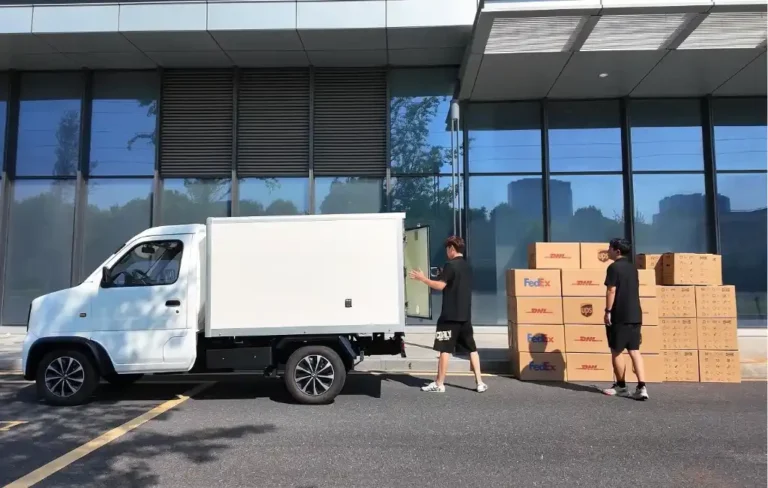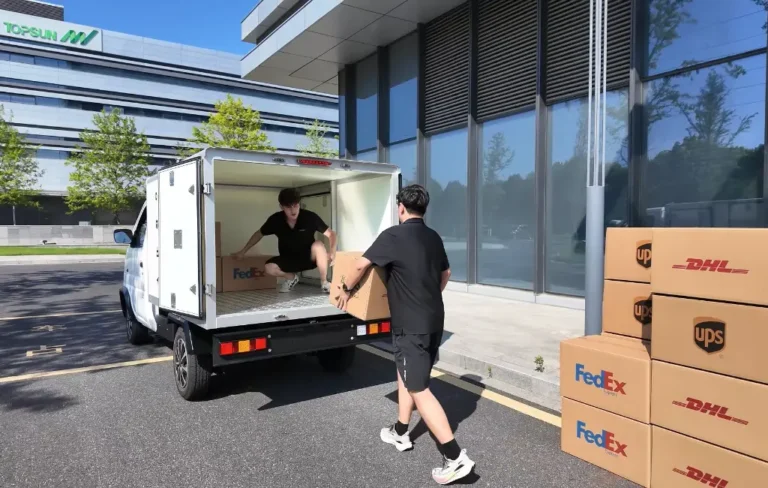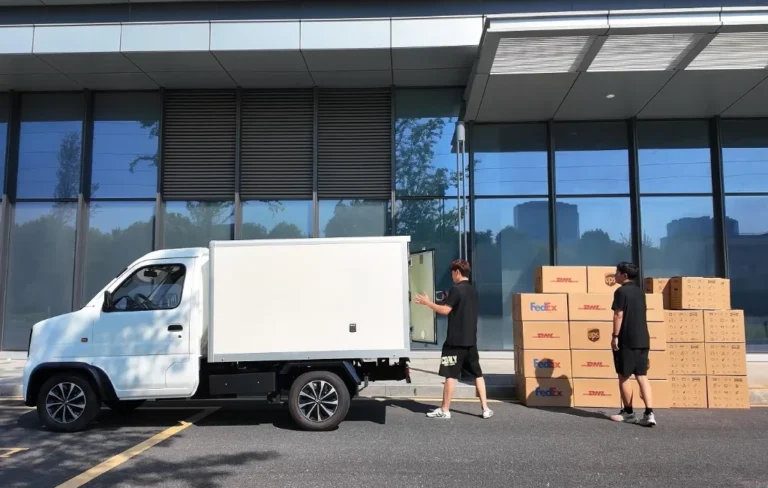

Consumers value fast deliveries, but it is the balance between cost, convenience, and reliability that defines an outstanding delivery experience.
The internet now occupies a central place in consumers’ daily lives. According to the Digital 2026: Mid-year Global Update Report by DataReportal, 73.8% of the world’s population uses the internet, with information search and communication with friends and family being the two main reasons for its use.
This constant presence in everyday life is also reflected in the amount of time spent online. On average, users aged over 16 spend 33 hours and 13 minutes per week consuming digital media.
A large share of this activity takes place through mobile devices: 96.2% of users rely on a smartphone or feature phone to access the internet. By comparison, only 58.3% use laptops or desktop computers for this purpose.
In Portugal, internet penetration is even more significant, reaching around 90% of the population. Portuguese users spend an average of 33 hours and 57 minutes per week consuming online media.
As is the case globally, mobile devices dominate internet access, being used by 96.3% of users. However, computer-based access has a greater presence than the global average, with 76.2% of Portuguese users relying on laptops or desktop computers to browse online.
The growing integration of the internet into consumers’ daily lives has also transformed the way purchases are made. E-commerce, which for many years was viewed with some distrust and used by only a minority, has become an integral part of consumer shopping habits.
DataReportal data clearly illustrates this shift: 56.2% of internet users aged over 16 make online purchases every week, and 57.2% say they prefer shopping online rather than visiting a physical store.
In Portugal, although adoption is somewhat more moderate, the trend is equally evident. Around 42.7% of users shop online weekly, while 43.6% say they prefer online shopping to visiting a brick-and-mortar store.
As for the most popular e-commerce categories in Portugal, ANACOM data shows that clothing and footwear, along with home-delivered meals, rank among consumers’ top preferences.
The growth of online shopping has brought with it a significant increase in delivery volumes and greater pressure on last-mile operations. This trend is expected to intensify in the coming years.
According to Statista, the number of users in the European Union’s e-commerce market was estimated at 252 million in 2024 and could reach 310 million by 2030.
At the same time, B2C market revenues were estimated at USD 398 billion in 2024, with projections indicating growth to USD 546 billion by 2030.
As more consumers adopt e-commerce and the market continues to expand, the demands placed on distribution networks and delivery services also increase. Consumers have become accustomed to the convenience of receiving parcels at home and, as a result, their expectations regarding the delivery process have become higher and more sophisticated.
In the next section, we examine the main consumer expectations regarding last-mile delivery and their impact on delivery operations.
Summary
- 90% of the Portuguese population uses the internet.
- Around 42.7% of Portuguese internet users aged 16 and over shop online every week,
- The number of users in the European Union’s e-commerce market could reach 310 million by 2030.
- Market revenues are projected to grow to USD 546 billion by 2030.
- Delivery costs are one of the main factors influencing purchasing decisions, followed by delivery speed.
- Although home delivery remains consumers’ preferred option, out-of-home delivery solutions are gaining ground due to their convenience.
- Consumers increasingly value service predictability.
Consumer Expectations for Online Deliveries
Free and Fast Deliveries
- 35% of consumers identify delivery cost as the most important aspect of the delivery process.
- 71.76% of European shoppers prefer free delivery over paid next-day delivery.
- Among European consumers, while speed is valued, most shoppers do not require immediate delivery.
In a context shaped by inflation and rising living costs, price remains one of the main factors influencing purchasing decisions. According to the E-commerce Delivery Compass study, 75.05% of European shoppers say that inflation has made them more price-sensitive. This concern also extends to the delivery stage, where cost emerges as the attribute consumers value most.
According to Statista, 35% of consumers identify delivery cost as the most important characteristic of the delivery process. Similarly, DataReportal reveals that 49.6% of internet users aged 16 and over consider free delivery to be the main factor encouraging them to make an online purchase.
The importance of this factor is so significant that many consumers are willing to forgo other benefits in order to avoid additional charges. According to the E-commerce Delivery Compass, 71.76% of European shoppers prefer free delivery over paid next-day delivery. Furthermore, 75.88% say they are willing to wait longer for their order if it means not having to pay for delivery.
However, price is not the only factor shaping consumer expectations. Speed continues to play a fundamental role in the online shopping experience. According to DataReportal, 27.2% of internet users aged over 16 say that the possibility of receiving an order the next day encourages them to make a purchase. In turn, Statista data indicates that 50% of consumers believe faster deliveries are one of the areas of logistics most in need of improvement.
Nevertheless, when consumer expectations in Europe are examined in greater detail, an interesting conclusion emerges. While speed is appreciated, most shoppers do not demand immediate delivery. According to the E-commerce Delivery Compass study, only 2.38% of consumers expect to receive their orders the next day. In contrast, 36.90% consider a delivery timeframe of two to three days acceptable, while 33.78% are willing to wait between four and five days.
These findings suggest that, for many consumers, speed remains important, but not at any cost. In practice, the balance between price and delivery time appears to be more relevant than simply obtaining the fastest possible delivery. For logistics operators and retailers, the challenge lies in offering delivery options that combine convenience, speed, and, above all, cost efficiency.
Convenience and Reliability
- Although home delivery remains the preferred option for European consumers, out-of-home alternatives are becoming increasingly relevant.
- The closer a collection point is located, the more likely consumers are to choose this delivery option.
- Consumers place growing importance on service predictability, preferring to know exactly when they will receive their orders.
While home delivery remains the preferred option among European consumers, out-of-home delivery alternatives are gaining relevance. According to the E-commerce Delivery Compass study, 30.60% of consumers prefer to receive their orders at home. However, pick-up points (10.27%), parcel lockers (9.16%), and collection from local stores (7.40%) together account for 26.83% of consumer preferences in Europe, increasingly closing the gap with traditional home delivery.
This trend is supported by Statista data. When asked about areas of logistics they would like to see improved, 45% of consumers cited the ability to customize delivery and returns time slots, as well as an increase in the number of pick-up locations, including stores and parcel lockers.
At its core, these findings reflect an expectation that is becoming increasingly important in e-commerce: convenience. Consumers are seeking solutions that fit their schedules and daily routines, reducing the need to stay at home waiting for a parcel. In this context, pick-up points and, in particular, automated parcel lockers stand out for offering greater flexibility, thanks to extended opening hours and the ability to collect orders at more convenient times.
The importance of convenience is also highlighted in the study Innovative Delivery Methods in the Last-Mile: Unveiling Consumer Preferences, which examined the factors influencing the choice between home delivery and collection points. For collection-point deliveries, in addition to price and speed, consumers value factors such as proximity to the collection location, available opening hours, the delivery method used, and the tracking information provided throughout the process.
Among all these factors, location plays a particularly important role. The study’s authors concluded that the closer a collection point is to the consumer, the more likely they are to choose that option. This finding reinforces not only the importance of convenience in the delivery experience, but also the need to develop comprehensive and strategically distributed pick-up networks.
However, convenience alone does not guarantee a positive delivery experience. Reliability remains one of the most valued expectations among consumers. According to the E-commerce Delivery Compass study, 26.56% of European consumers state that receiving an order within the promised timeframe is the main factor that distinguishes a good delivery experience from one that is merely acceptable.
Interestingly, this concern for reliability appears to outweigh the demand for maximum delivery speed. As discussed earlier, only a small percentage of European consumers expect next-day delivery. By contrast, consumers increasingly value service predictability, preferring to know exactly when their order will arrive rather than receiving a vague estimate based on a range of several business days.
For logistics operators and retailers, offering more delivery options is important, but ensuring that orders arrive at the promised time may be even more critical to customer satisfaction. After all, for many consumers, a predictable and convenient delivery experience is worth more than one that is simply fast.
Conclusion
The continued growth of e-commerce is transforming not only the way consumers shop, but also what they expect from delivery services. As the number of online shoppers increases and the market continues to expand, the delivery experience is becoming an increasingly important factor in customer satisfaction and loyalty.
The data analysed shows that consumers are looking above all for a balance between cost, speed, convenience, and reliability. Free delivery remains one of the main factors influencing purchasing decisions, but this does not mean that consumers disregard delivery speed. What appears to be emerging is a preference for solutions that offer a good compromise between price and delivery time, rather than a widespread demand for the fastest possible delivery.
At the same time, the growing adoption of pick-up points and automated parcel lockers demonstrates that convenience is taking on new forms. Consumers increasingly value the flexibility to choose where and when they receive their orders, provided that this choice simplifies their daily routines.
However, among all the expectations analysed, reliability stands out as one of the most decisive factors. More than receiving an order as quickly as possible, consumers want the confidence that it will arrive within the promised timeframe, supported by clear communication throughout the entire delivery process.
For retailers and logistics operators, competing solely on delivery speed is no longer enough. Success in the last mile will depend on the ability to provide predictable, flexible, and cost-effective delivery solutions, placing the customer experience at the centre of the strategy. In an increasingly competitive market, companies that best understand and respond to these expectations will be better positioned to attract and retain consumers.
Sources
Autoridade Nacional de Comunicações [ANACOM]. (2026, fevereiro). 50% da população em Portugal efetuou compras online em 2025. ANACOM. https://anacom.pt/render.jsp?contentId=1827590
DataReportal. (2026). Digital 2026: Mid-year Global Update Report. In DataReportal. https://datareportal.com/reports/digital-2026-mid-year-global-update-report
Karlı, H., & Tanyaş, M. (2024). Innovative Delivery Methods in the Last-Mile: Unveiling Consumer Preference. Future Transportation, 4(1), 152–173. https://doi.org/10.3390/futuretransp4010009
Sendcloud. (2026). E-commerce Delivery Compass 2026. In Sendcloud. https://www.sendcloud.com/ecommerce-delivery-compass/#key-findings
Statista. (2026a). Main logistic improvements online shoppers want while buying online worldwide in 2026 [Dataset; Online]. In Statista. https://www.statista.com/statistics/1618377/online-shoppers-desired-improvements-worldwide/
Statista. (2026b). Main priorities for delivery in online shopping 2025 [Dataset; Online]. In Statista. https://www.statista.com/statistics/1472017/most-important-delivery-aspects-online-shopping/
Statista. (2026c). Main reasons for cart abandonment among online shoppers worldwide 2026 [Dataset; Online]. In Statista. https://www.statista.com/statistics/1383326/reasons-for-cart-abandonment-worldwide/
Statista. (2026d). Number of e-commerce users in the EU 2020-2030 [Dataset; Online]. In Statista. https://www.statista.com/forecasts/1658268/eu-number-of-ecommerce-users/
Statista. (2026e). Revenue of the B2C e-commerce market in EU 2020-2030 [Dataset; Online]. In Statista. https://www.statista.com/forecasts/1658236/eu-b2c-ecommerce-revenue/
You Might Also Like
Consumer Expectations for Online Deliveries
Consumers value fast deliveries, but it is the balance between cost, convenience, and reliability that defines an outstanding delivery experience.
Ler mais
Last Mile Challenges in the Urban Context
Discover the factors that are putting pressure on the urban last mile and reshaping distribution operations.
Read more